

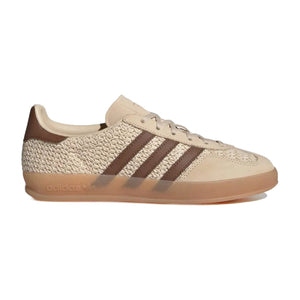
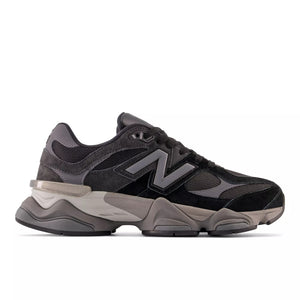
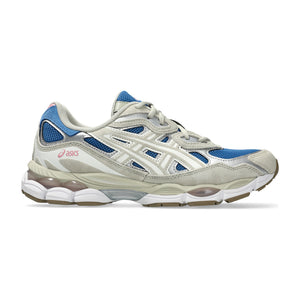
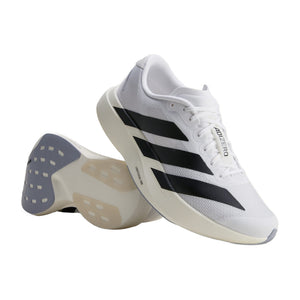

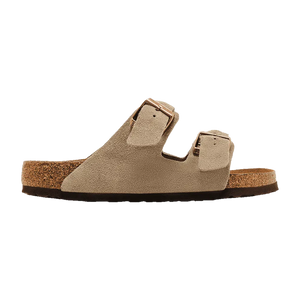
Black Friday Sneakers 2026: Which Models Actually Get Discounted
Black Friday 2026 falls on Friday 27 November – and sneakers are one of the few product groups where the sale genuinely adds up. In idealo's annual price study, sneakers ranked among the strongest categories with an average saving of 16 percent, well above the overall average of eight percent. The catch: the day with the biggest reduction is rarely the Friday itself, and a large share of the most wanted models never gets discounted at all.
This guide explains which sneakers end up in promotions and which are systematically left out, how to tell a real reduction from an inflated reference price, and what applies to sizing and returns.
The 2026 dates – and why Friday isn't the cheapest day
The promotional window has long been a full week. Black Week runs from Monday 23 November to Sunday 29 November 2026. Black Friday is Friday 27 November, with Cyber Monday following on Monday 30 November. The date is tied to American Thanksgiving, which falls on 26 November in 2026 – but many retailers start as early as the beginning of November.
That leads to something counterintuitive: in idealo's analysis, more than half of the products studied were cheaper on a different November day than on Black Friday. So start watching the price of the pair you want now. Friday is the loudest day, not necessarily the cheapest.
What the savings figures actually say
idealo tracked the 10,000 most-clicked products of Black Friday 2025 across roughly 3,500 online shops, comparing the price on the day with the October average.
| Finding | Figure |
|---|---|
| Products cheaper than in October | 79 percent |
| Average saving across all products | 8 percent |
| Products reduced by at least 20 percent | 13 percent |
| Products that were cheaper on another November day | 52 percent |
| Sneakers category, average saving | 16 percent (around 16 euros) |
So sneakers are one of the rewarding categories, because on a pair above 100 euros the absolute amount is noticeable. But the caveat put forward by idealo price expert Florian Kriegel still applies: particularly deep discounts on new arrivals or high-demand items are unlikely.
Which sneakers get reduced – and which never do
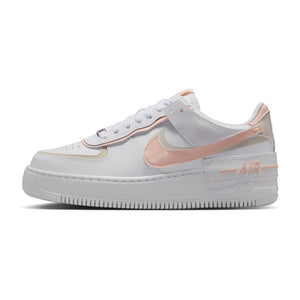
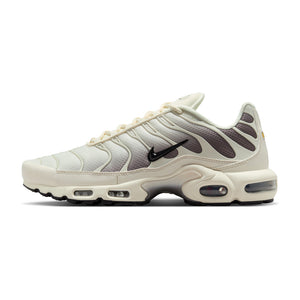
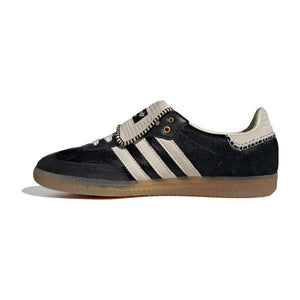
Discounts don't follow chance, they follow availability. Models produced permanently in large numbers – known in the scene as general releases – don't sell out on their own and show up in promotions regularly. Limited releases and collaborations are the opposite: demand exceeds the production run, the resale market often sits above retail, and a discount would make no commercial sense. Classics like the Air Force 1, the adidas Samba or the Air Max family belong to the first group; well-known Jordan retro colours and hype collaborations to the second.
| Category | In the sale | Why |
|---|---|---|
| General release, permanently in the range | often reduced | Large production runs, no scarcity pressure |
| Outgoing colourways from last season | often reduced sharply | Making room for the new seasonal colour; build identical |
| Previous generation of a model | often reduced | The successor is already on the shelf |
| Performance running shoes with a successor | often reduced | Fixed model cycle with annual updates |
| Releases from the past few weeks | rarely reduced | The price level is deliberately protected |
| In-demand retro colourways | rarely reduced | Usually excluded from promotions |
| Limited releases and collaborations | practically never reduced | Demand above supply, resale above retail |
The second row is the interesting one: a colourway from spring that didn't sell out is technically the same shoe – all that changed is the attention. If you're flexible on colour, you get the same silhouette for less. Which silhouette suits which purpose is covered in the guide to the most important sneaker silhouettes.
Spotting a real discount: the 30-day rule and its gap
Since May 2022, section 11 of the German Price Indication Ordinance has required that anyone advertising a price reduction must state the lowest price charged in the 30 days before the reduction as the reference. The European Court of Justice confirmed this in 2024. The old trick of nudging the price up shortly beforehand and then “cutting” it is therefore covered.
Two gaps remain. First, the rule does not apply to comparisons with the manufacturer's recommended retail price: minus 50 percent off RRP can mean almost nothing against the actual market price, because the RRP is rarely charged in retail anyway – the Rhineland-Palatinate consumer advice centre warns about this explicitly. Second, the rule only looks back 30 days and says nothing about whether other shops are cheaper.
That caution is warranted is shown by a coordinated check by the European Commission: authorities from 23 EU states plus Iceland and Norway examined 314 online retailers in November and December 2025, with results published on 26 March 2026. At least 30 percent did not state their discounts in line with the rules. Eighteen percent used pressure selling tactics such as countdowns or claimed scarcity, 10 percent revealed mandatory extra costs only late in the checkout, and 36 percent tried to add optional items to the basket.
In practice: look at the price history over several months rather than the percentage alone, compare against the 30-day best price on advertised reductions, check the final price including shipping – and treat a ticking timer as a design element, not information. Warning signs for fake shops: typos in the address or brand name, a missing imprint, prices far below market level, and only advance bank transfer left at the end. How to recognise genuine pairs is covered in the guide to spotting fakes.
Size and fit: the most expensive mistake in a sale
In a sale it isn't the shoe that shrinks, it's the choice. What gets reduced is often what's left over, and what's left over tends to sit at the edges of the size range. That creates the temptation to go half a size off because the price is right. A pair that pinches doesn't get worn – and an unworn pair is 100 percent too expensive regardless of the discount.
On top of that, fit diverges between brands and even between models from the same brand. For narrowly built retro silhouettes the common recommendation is half a size up, while many running lasts run rather generous – these are experience values, not manufacturer specifications. So don't rely on your usual number: the sneaker size chart for US, UK and EU and the size comparison between Nike, adidas, New Balance and Asics are better preparation than any wishlist. In November the intended use matters too – which constructions cope with wet and cold is covered in the autumn and winter guide.
Returns and payment: what applies in a sale
A reduced price does not limit your right of withdrawal. For purchase contracts concluded online in Germany there is a 14-day withdrawal period, starting the day after complete delivery, and you don't have to give a reason. The goods then have to be on their way back within 14 days of the withdrawal; the original packaging is not mandatory. The retailer refunds within 14 days but may wait until the goods are back or until you provide proof of postage.
Two details that often get told wrong: you generally bear the return shipping costs – but only if the shop informed you about this correctly before the contract was concluded, otherwise it pays. And you are allowed to unpack and try the shoes on; that counts as the permitted inspection of the goods. Which deadline and which costs apply in a specific case is set out in that shop's withdrawal policy – read it before you order, not afterwards.
New this year: since 20 November 2026, the German act implementing the EU Consumer Credit Directive (CCD II) treats instalment purchases, interest-free financing and buy-now-pay-later offers as consumer credit, including amounts below 200 euros. Providers must run a creditworthiness check beforehand and inform you about costs, term and risks – so an instalment option may suddenly be missing at checkout. Classic invoice purchase with payment within 14 days still falls outside the rules.
Which sale strategy suits you?
You want one specific model in your size. Then waiting is the wrong strategy. Note the current price now and buy as soon as it drops below the level of recent weeks – which November day it happens on is secondary. For sought-after silhouettes in common sizes, availability is scarcer than the discount.
You're flexible on model and colour. Then Black Week is your window. Focus on previous-season colours and the outgoing generation rather than new arrivals, filter strictly by your size and compare across several shops. This is where the double-digit reductions sit.
You want a limited pair or a hyped colourway. Then Black Friday won't help – those models don't get discounted. Plan that purchase independently of the sale.
The clear recommendation for most people: pick two or three candidates, nail down your size beforehand, watch the price history from now on, and buy at the first genuine low instead of hoping for a miracle on 27 November. If you want to get your bearings first, start in the sale and work from there to silhouette and size, not the other way round.
Frequently asked questions
When is Black Friday 2026?
Black Friday 2026 is Friday 27 November. Black Week runs from Monday 23 November to Sunday 29 November, and Cyber Monday follows on Monday 30 November. Many retailers start their promotions as early as the beginning of November.
Are Black Friday discounts real?
Partly. In idealo's price study, 79 percent of products were cheaper than in October, but by an average of only eight percent. In an EU check of 314 online retailers in November and December 2025, at least 30 percent did not state their discounts in line with the rules. The price history tells you more than the percentage.
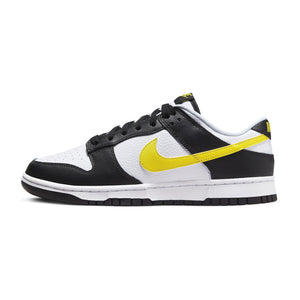
Why are Jordan retros and Dunks almost never reduced?
Because the production run is smaller than demand. For limited releases and sought-after retro colours the resale price often sits above retail – a discount would be a loss-making move for the retailer. What gets reduced instead are widely available general release models and outgoing colourways.
Can I return sneakers that were on sale?
Yes. The statutory 14-day right of withdrawal for online purchases applies regardless of whether the item was reduced. A blanket exclusion for sale items does not exist in distance selling. The period starts the day after complete delivery.
Who pays for the return shipping?
You do as the consumer in principle – but only if the shop informed you about it correctly before the purchase, for example in the withdrawal policy or the terms and conditions. If that information is missing, the retailer bears the cost. Many shops cover return shipping voluntarily.
Can I try the sneakers on and still withdraw?
Yes. Unpacking and trying them on count as the permitted inspection of the goods. The retailer can only claim compensation for loss of value if the goods were damaged or worn beyond that – after a lap outside, say, rather than a fitting on the carpet.