


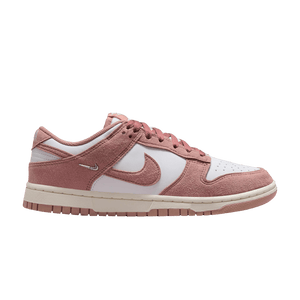


Sneaker Sizing by Brand: Nike, adidas, New Balance and Asics
You know your sneaker size – and the new pair still pinches, while the one before it fit perfectly. That is rarely down to you. Every brand builds its shoes around its own last, the form a shoe is constructed over. That last decides how long, how wide and how high the interior turns out. Which is why an EU 43 from Nike sits differently from an EU 43 from adidas, even though the number on the label is identical.
This guide collects the common real-world advice for the four brands compared most often in sneakers: Nike, adidas, New Balance and Asics. These are not official manufacturer specifications, but what has established itself in practice across many models as a workable rule of thumb. If you want to convert US, UK and EU cleanly, that is in our sneaker size chart.
Why the same number fits differently by brand
Three factors shift the fit, and they act independently of one another.
The last. A basketball last from the eighties is built wider and higher than a flat terrace-shoe last. You notice that mainly across the ball of the foot and over the instep, not necessarily in length.
The conversion. Brands step their EU sizes differently. Nike works mostly in half steps (42, 42.5, 43), adidas uses thirds (42, 42 2/3, 43 1/3). Two shoes printed with the same EU number can therefore be different lengths in reality – and the same US size maps to a different EU number depending on the brand.
The upper. Smooth leather gives after a few weeks, mesh and knit are pliable from the start, suede lands in between. A shoe that feels snug fresh out of the box can come good once broken in – a shoe that is too long never gets shorter.
The four brands at a glance
The table below sums up what has become the usual recommendation. It does not replace trying them on, but it gives you a starting point.
| Brand | Real-world advice on length | Forefoot and width | What to watch for |
|---|---|---|---|
| Nike Air Force 1 | Common advice: half a size down from usual | Fairly wide, roomy interior | Often runs longer than the number suggests |
| Nike Dunk | True to size | Tight across the instep | With a high instep or wide feet, half a size up |
| Nike (Air Max line) | Usually true to size, sometimes generous | Medium, varies by model | The Air Max family is inconsistent in itself – check model by model |
| adidas (Samba, Gazelle, Campus) | True to size in length, half a size up for wide feet | Distinctly narrow and flat | With wide feet the problem is the width, not the length |
| New Balance | Usually true to your normal size | Medium, many models also in several widths | Rather than changing the length, pick the right width |
| Asics | Usually true to size, half a size up if cut narrow | Varies by model, running models often also come in wide versions | Plenty of cushioning underfoot, so a higher stance |
Nike: generously built, but not everywhere
The Air Force 1 and the Dunk share a basketball heritage but fit differently. The Air Force 1 is voluminous and runs long – it's the model people most often suggest going half a size down in. The Dunk is true to size in length and rather tight across the instep. If you are torn between the two, the direct comparison of Air Force 1 and Dunk helps, because they also differ in sole height and tongue.
The Air Max line cannot be treated as one. It spans silhouettes from four decades, and the lasts vary accordingly. Here it pays to look model by model rather than apply a brand rule. The Air Jordan 1, meanwhile, usually runs true to size in length but has a comparatively narrow toe box – the differences between the heights are covered in the guide to Jordan 1 High, Mid and Low.
adidas: narrow, flat, close to the ground
Samba, Gazelle and Campus come from indoor and training use and are cut flat and narrow to match. In length your usual size fits – adidas itself lists the Samba as true to size. For wider feet the widespread advice is to go half a size up. The important distinction: for many people the problem is not the length but the width. Half a size more buys a little air across the forefoot; it does not turn a narrow last into a wide one. People with very wide feet often still aren't comfortable in these three silhouettes, even half a size up.
Which of the three makes sense for you is covered in the comparison of Samba, Gazelle and Campus. They sit close together in fit, with the Campus slightly roomier.
New Balance and Asics: width instead of compromise
New Balance is the brand where you need to game the system least. Most models fit your usual size, and many silhouettes come in several widths on top of that. That is the more honest route than taking half a size more, because a shoe that is too long slips at the heel and creases in the wrong place. How to read the width codes is in the guide to sneaker widths D, 2E and 4E.
Asics comes from running and builds with noticeably more material underfoot. The width varies by model, and many running models also come in wide versions. Length is true to size for most people. With wide feet, half a size more is a compromise here too rather than a solution – the wide version is the better choice where it exists.
How to measure properly
Before you rely on brand rules, it is worth measuring. Stand on a sheet of paper against a wall wearing the sock you will wear in the shoe, mark the longest point of your foot and measure from the wall to the mark in centimetres. Do it in the evening, because feet swell slightly over the course of the day, and measure both feet – a few millimetres of difference is normal. The longer foot decides the size.
Leave roughly a centimetre between your toe and the inside of the shoe. The brands' size charts already allow for that room – so simply look up your measured foot length. If your measurement falls exactly between two sizes, let the brand decide: with adidas round up, with the Nike Air Force 1 round down, with New Balance and Asics reach for the right width rather than the next length.
Which one suits you?
Wide or high-volume feet: go for New Balance. The combination of true length and available widths solves the problem in the right place. Second choice is the Nike Air Force 1, which offers considerably more room across the forefoot than the adidas classics.
Narrow feet: this is where adidas plays to its strengths. The Samba and Gazelle fit snugly and hold the foot without extra lacing tricks. In the Air Force 1, on the other hand, you may find the foot has play inside the shoe.
Average foot shape, first purchase: stay with your usual size and pick a model of medium build. Within the Nike range the Air Max line is a solid entry point, because it is neither particularly narrow nor particularly voluminous.
Unsure between two sizes: let the brand be the tiebreaker, not the feeling. The rules of thumb above exist because they work in the majority of cases. For an overview of the silhouettes themselves, see the guide to the most important sneaker classics.
Frequently asked questions
Do Nike sneakers generally run larger than adidas?
As a tendency yes, but the statement is too broad. It holds above all for the Air Force 1, which runs noticeably roomier than the Samba, Gazelle and Campus. Within both brands there are models that deviate clearly. Rely on the rule for the specific model family rather than a blanket brand rule.
Can I just carry over my running shoe size?
Usually not one to one. Running shoes are often bought half a size up on purpose, because the foot moves forward and swells while running. For a lifestyle sneaker you wear day to day, that allowance is generally too much.
What do I do if the shoe only pinches across the forefoot?
That is a width problem, not a length problem. A size up only shifts the pressure point backwards and lets the heel slip. The better answer is a model with a wider last or, where available, the same length in a larger width.
Does a sneaker that is too tight break in?
Only to a point. Smooth leather gives over a few weeks and moulds to the shape of the foot, mesh and knit barely, synthetic uppers practically not at all. A shoe that hurts from day one rarely becomes bearable through wear.
Why are there several sizes on the label?
The inner label usually carries US, UK, EU and the length in centimetres. The centimetre figure is the only one comparable across brands – US, UK and EU figures are rounded and assigned differently by each brand.