


Asics Sneaker Models Compared: Gel-1130, Gel-NYC, Kayano 14 and GT-2160
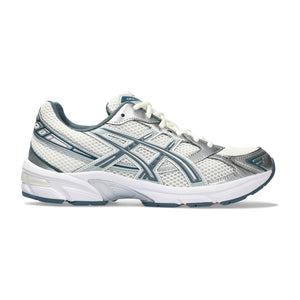
Asics sneaker models all look alike in a product grid: silver mesh, layered overlays, visible GEL in the heel. That is exactly the problem. Anyone choosing between the Gel-1130, Gel-NYC, Gel-Kayano 14 and GT-2160 often picks the wrong silhouette on screen — the four shoes share a design language, but not their feel underfoot, not their fit and not their purpose.
This guide sorts out the Asics Sportstyle line: where each model comes from, what sits in the sole, how it fits according to wearer reports, and who it is built for. It also draws the line to the running range, because the gap between a Gel-1130 and a Gel-Nimbus is wider than the similar names suggest.
The four silhouettes and where they come from
Three of the four are genuine archive shoes. The fourth is a modern reassembly.
The Gel-Kayano 14 arrived in 2008 as the flagship of the Kayano stability line and won Runner's World's International Editor's Choice Award the same year. It disappeared with the next model change and came back in 2020 as a lifestyle silhouette — right into the Y2K revival. It is the loudest of the four: tall midsole, glossy overlays, sweeping lines.
The Gel-1130 also landed in 2008, but as the accessible option below the Kayano 14 and the GT-2160. It borrowed the Kayano's design cues and technology at a lower price. What put it back in the conversation was Kiko Kostadinov's UB2-S version in 2021; the lifestyle release that followed became one of the brand's best sellers. The silhouette is flatter and plainer than the Kayano's.
The GT-2160 picks up the look of the GT line from the early 2010s — technical, slightly industrial, with a DuoMax support wedge and a Space Trusstic unit. It is the most sober of the four.
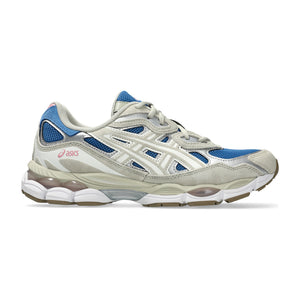
The Gel-NYC is the newcomer: launched in 2023, following a collaboration with New York label Awake NY that January. It is not a retro but a hybrid — the upper quotes the Gel-Nimbus 3 and the Gel-MC Plus V, while the sole comes from the Gel-Cumulus 16. Shortly after launch, several industry sources reported it as Asics' second best-selling shoe.
Sportstyle or running: two separate worlds
All four sit under Asics Sportstyle, not Performance. That has two practical consequences. First: lifestyle models generally run true to size, while actual running shoes usually come with a recommendation to go half a size up so the foot has room to swell on the run. Second: extended widths such as 2E and 4E exist almost exclusively in the running range — on the Gel-Kayano, GT-2000 and Gel-Nimbus. For the Sportstyle silhouettes, half a size up is the only route to more room for wide feet. How width codes work in the first place is covered in our guide to shoe widths D, 2E and 4E.
If you actually plan to put in the miles, the running shoe selection serves you better than an archive model from 2008. The Sportstyle shoes carry running technology, but they are built for walking and standing.
The models head to head
| Model | First release | Silhouette | Sole and technology | Fit (wearer reports) | Suits |
|---|---|---|---|---|---|
| Gel-Kayano 14 | 2008, relaunched 2020 | Tallest and boldest of the four, heavily layered | GEL in heel and forefoot, TRUSSTIC through the midfoot | Mostly true to size; half a size up is the common call for a wide forefoot | A statement look, long days on your feet |
| Gel-1130 | 2008, revived from 2021 | Flatter, cleaner, slimmer | GEL in the heel (forefoot too, depending on the version), TRUSSTIC | True to size to slightly snug; narrow through the midfoot, half a size up for wide feet | A low-key entry point, easy to combine |
| Gel-NYC | 2023 (hybrid of archive models) | Bulky, multi-layered, rounder | Lightweight foam plus GEL in heel and forefoot, Cumulus 16 tooling | True to size; reports on the toe box disagree — see below | A fashion-led streetwear look |
| GT-2160 | Early 2010s look | Technical, sober, wide stance | GEL, DuoMax support wedge, Space Trusstic | True to size, cut on the roomier side | A stable feel with no showmanship |
Cushioning and feel
This is where the differences live that photos never show. Among wearers, the Gel-Kayano 14 is considered the softest and most supportive of the four: GEL along the full length, plus the TRUSSTIC unit that limits midfoot twisting. If you are standing for eight hours, the common view points here.
The Gel-NYC sits lower and feels firmer than the Kayano, but stays flexible and light. The Gel-1130 is the most direct of the four: firm, close to the ground, little give. That is not a flaw — plenty of people prefer exactly that connected feel day to day.
The GT-2160 is the outlier with the hardest numbers behind it. Independent lab testing credits it with above-average heel shock absorption, around 340 grams in a men's US 9 and a wider midsole than the category average. The same testing rates the mesh at the toe as fragile — which matters around narrow pavements and kerbs.
Size and fit
Asics lifestyle models are generally considered true to size and follow European length standards. Two caveats keep surfacing in wearer reports: the forefoot is cut narrow on many Asics silhouettes, and individual retailers' sizing notes do not always match what wearers say.
That is clearest on the Gel-NYC. Some sources describe the toe box as tight in both height and width and recommend half a size up for wide feet; others call the construction more flexible and more generous than other Asics models. If you are unsure, try the shoe on, or order half a size up if your foot is wide — that is the recommendation both camps can live with.
On the Gel-1130, the common read is a narrow midfoot; for wide feet or pressure on the little toe, half a size up is the usual move. The Gel-Kayano 14 runs true to size, though some wearers report pressure in the forefoot. By lab measurement, the GT-2160 is the roomiest of the four.
If you are coming from Nike, adidas or New Balance, the numbers do not translate one to one. The differences between brands are set out in our size comparison across Nike, adidas, New Balance and Asics.
Which one is right for you?
You want the boldest shoe and the softest cushioning: Gel-Kayano 14. It is the flagship, it is widely held to have the best arch support of the four, and it forgives the most when you are out all day. The busy panelling also hides wear better than a smooth pale surface.
You want a low-key everyday shoe at the best price: Gel-1130. It is the cheapest way into the Y2K runner look, it disappears under a straight-leg trouser and it argues with no outfit. If you are buying only one pair of Asics, this is the safe choice.
You want the streetwear statement: Gel-NYC. Bulky proportions, layered mesh, synthetic leather and suede, and a collaboration history running from Awake NY to Bodega. In pale colourways it is also the highest-maintenance of the four. The Gel-NYC selection shows how far the colour range stretches.
You want stability without the show: GT-2160. Wide stance, firm cushioning, sober design — with the caveat that the upper needs care.
If flatter retro runners are more your thing, the alternatives sit with New Balance; our comparison of the 550, 2002R, 1906R and 9060 sorts them out the same way this piece sorts the Asics line-up. The full Asics selection covers both ranges, Sportstyle and running.
Care: pale midsoles and open mesh
The four demand different amounts of attention. The Gel-Kayano 14 is the most forgiving thanks to its material mix. Pale Gel-NYC versions are the opposite: synthetic leather and mesh in cream show every splash, and pale midsoles yellow if you leave them alone. On the Gel-1130 it depends on the colourway — suede needs a brush and a protector spray, pale versions need the same midsole attention as any white shoe.
The washing machine is not an option on any of the four: synthetic leather and suede take damage, and glued overlays come loose. Clean by hand with mild soap, a soft brush and air drying — the steps per material are in our cleaning guide for leather, suede, mesh and canvas. How open mesh holds up in a wet autumn is covered in our piece on sneakers in rain and cold.
Frequently asked questions
Which Asics sneaker is the most comfortable?
By common wearer consensus, the Gel-Kayano 14: the softest cushioning, the best arch support and the widest footbed of the four Sportstyle models. The Gel-NYC sits lower and firmer, the Gel-1130 firmer still, and the GT-2160 scores on stability rather than softness.
Can you run in the Gel-1130?
For easy-paced runs, treadmill sessions and everyday tempo, yes. It was engineered as a running shoe in 2008 and carries GEL plus TRUSSTIC, but it lacks modern foams, a plate and race geometry. For speed work, long distances and a training plan, a current running shoe is the better tool.
Do Asics sneakers run small?
The lifestyle models are widely reported to run true to size, with length following European standards. The forefoot is cut narrow on several silhouettes, which is why half a size up often comes up for wide feet. For actual running shoes, half a size up is the standard recommendation.
What is the difference between the Gel-NYC and the Gel-1130?
The Gel-NYC is bulkier, more layered and taller, with mesh, synthetic leather, suede and visible GEL inserts. The Gel-1130 is flatter, plainer and easier to combine. Technically, the 1130 brings the TRUSSTIC system, while the NYC relies on lightweight foam with GEL. On price, the 1130 sits well below.
Are the Asics lifestyle models available in wide widths?
Usually not. Asics offers extended widths such as 2E and 4E mainly in the running range, on the Gel-Kayano, GT-2000 and Gel-Nimbus. On the Sportstyle silhouettes, half a size up remains the usual way to more room.
Can I put Asics sneakers in the washing machine?
Better not. Synthetic leather, suede and glued overlays suffer in the drum and in heat. Take the laces out, brush off loose dirt dry, then work on spots with a mild cleaner and a damp cloth, and let them dry at room temperature — not on a radiator and not in a tumble dryer.