



Air Jordan 1 or Air Jordan 4? The Direct Comparison
Air Jordan 1 or Air Jordan 4 — most first Jordan purchases come down to this question. Both come from the basketball courts of the eighties, both carry a Nike Air unit, both sit in a similar price range as retros. On foot, though, they have almost nothing in common: the 1985 Jordan 1 is flat, plain and made of leather, while the 1989 Jordan 4 is tall, heavy and full of visible technology.
This comparison puts measured numbers side by side — stack height, weight, stiffness, cushioning and internal width, recorded by the shoe lab RunRepeat on cut-open pairs — along with fit experiences from retailers and a clear recommendation. If you are really choosing between two everyday models, the comparison Air Force 1 or Dunk is the better read.
Both silhouettes in brief
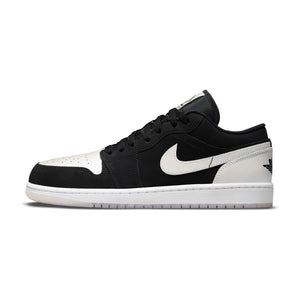
Peter Moore's Jordan 1 is a leather shoe stitched into a rubber cupsole, with a flat Air unit under the heel — that is all the technology there is. It exists as a High, Mid and Low; which cut looks and feels how is covered in the difference between Jordan 1 High, Mid and Low.
Tinker Hatfield's Jordan 4 has far more parts: mesh panels on the sides, the plastic “wings” as adjustable lace guides, a heel pull tab, and a polyurethane midsole with a visible heel Air unit plus a hidden one in the forefoot. As a mid-top it sits lower on the ankle than a Jordan 1 High, but takes up more space on the ground.
| Feature | Air Jordan 1 | Air Jordan 4 |
|---|---|---|
| First release | 1985 | 1989 |
| Designer | Peter Moore | Tinker Hatfield |
| Cuts | High, Mid and Low | Mid-top |
| Midsole | Rubber cupsole with heel Air | Polyurethane with visible heel Air |
| Typical upper | Leather, sometimes suede | Leather, nubuck or Durabuck plus mesh |
| Standout parts | none | Wings, mesh, heel tab |
What the lab numbers say
RunRepeat cuts sneakers open lengthwise and measures them in US men's size 9 with a caliper, a durometer and a bending rig. The numbers below come from two individual tests — Air Jordan 1 Low and Air Jordan 4 Retro — and apply to the pair that was tested, not to every version. The right-hand column is the average across all lifestyle sneakers tested there.
| Measurement | Air Jordan 1 Low | Air Jordan 4 Retro | Average |
|---|---|---|---|
| Heel stack | 22.9 mm | 31.3 mm | 30.5 mm |
| Forefoot stack | 11.8 mm | 20.1 mm | 19.6 mm |
| Drop | 11.1 mm | 11.2 mm | 10.9 mm |
| Weight per shoe | 411 g | 553 g | 387 g |
| Shock absorption, heel | 70 SA | 92 SA | 88 SA |
| Energy return | 43.3 % | 45.8 % | 50.0 % |
| Stiffness | 16.2 N | 28.3 N | 13.5 N |
| Internal width at the ball | 94.9 mm | 93.7 mm | 92.4 mm |
| Toebox width | 68.5 mm | 70.3 mm | 68.7 mm |
| Tongue padding | average | 15.1 mm | 9.6 mm |
| Breathability | 2 out of 5 | 1 out of 5 | 2.8 out of 5 |
Three things stand out. The Jordan 1 sits unusually low to the ground: 22.9 mm at the heel is closer to an adidas Gazelle than to a modern sneaker. The Jordan 4 is heavy at 553 g per shoe — over a kilo for the pair, against 427 g for a Jordan 1 Mid. And at 28.3 N it is one of the stiffest lifestyle sneakers ever measured there: bending it takes more than twice the force of the average shoe.
Cushioning and how they feel day to day
The Jordan 4 cushions measurably better: 92 SA at the heel is slightly above average, while the Jordan 1 Low sits clearly below at 70 SA. The reason is the larger polyurethane midsole; on the Jordan 1, the small heel capsule inside a flat cupsole is the only source of cushioning.
What matters, though, is that both remain retro basketball shoes. Energy return is below average for both, and both feel firm and grounded rather than springy. For a few hours in town that is fine; for very long days on your feet neither is the first choice — and if that is the plan, start by swapping the insole, which on the Jordan 4 is a thin 3.9 mm instead of the usual 4.9 mm. On climate the Jordan 1 wins narrowly, 2 out of 5 points against 1 out of 5 — both are shoes for the cooler half of the year.
Size and fit: they pinch in different places
Length is the easy part: both are considered true to size, and most people wear the same number in a Jordan 1 and a Jordan 4. RunRepeat collected more than 800 owner votes for the Jordan 1 Low and more than 2,300 for the Mid, both leaning towards “true to size”; a reader poll by the German magazine Footpieces on the Jordan 4 came out at 78 per cent who stay with their usual size. For converting between US, UK and EU, use the sneaker size chart. One common mistake is carrying over your Air Force 1 size: the AF1 runs generous, so many buy it half a size down — transferred to a Jordan, that number gets too tight up front.
Width is the more interesting part, and here the sources contradict each other: some retailers call the Jordan 1 roomier at the front, others the Jordan 4. The measurements resolve it, because two different places are meant. At the widest part of the ball, the Jordan 1 Low is the wider shoe at 94.9 mm, with the Jordan 4 at 93.7 mm — which matches Nike's own wording that the Jordan 4 is “narrower at the metatarsals”. At the toes it flips: there the Jordan 4 measures 70.3 mm and the Jordan 1 only 68.5 mm. So the Jordan 1 starts wider and then tapers more sharply, while the Jordan 4 starts narrower and stays straighter at the front.
- Jordan 1: the pressure sits at the little toe. The leather is stitched into the rubber cupsole, and that rubber edge does not give sideways — the leather softens, but the shoe does not get wider. Loosening the first two rows of laces buys the most room.
- Jordan 4: the pressure sits further back, at the outer midfoot under the wings and the firm overlays; on top of that, the unusually thick 15.1 mm tongue takes up space over the instep. Older pairs earned the nickname “pinky toe killer” for it.
For wide feet, the common advice on both models is half a size up, not a full size — otherwise the heel slips. Nike's own size guide recommends true to size for the Jordan 4 Retro on standard feet, half a size up on wider feet, and true to size even for wide feet on the SB and “Reimagined” versions. A few German shops advise half a size up for the Jordan 1 across the board; that remains a minority view. GS pairs run narrower in both models.
Before or after 2023? The most important difference on the Jordan 4
If you are buying a Jordan 4, check the production year. After the Nike SB collaboration in spring 2023, the shape was reworked and moved closer to the 1989 original; Nike itself writes of the SB version that it brought back the '89 shape around the toebox for improved fit. A more heavily padded tongue and softer plastic parts came with it. Retail sources such as Soleretriever have described the fit as more forgiving ever since; pairs from before 2023 sit tighter.
One caveat that gets lost in many comparisons: the fully removed forefoot Air unit applies only to the SB version, which uses foam there for board feel. In the regular retro, the hidden unit is still present — the October 2026 lab test explicitly finds it in a current pair. The Jordan 1 has had no comparable rebuild; there the material decides — patent leather barely stretches, while full-grain leather and nubuck give a little.
Materials, care and durability
This is where the Jordan 1 pulls ahead: its rubber cupsole ages gracefully, and the leather tolerates dirt and moisture and cleans up with ordinary products.
The Jordan 4 asks for more. Dirt settles into the mesh, the plastic wings can crack after years, and the popular nubuck and suede colourways react badly to wet weather. Then there is the midsole: polyester-based polyurethane can hydrolyse over long periods, turning brittle under moisture and heat and crumbling under load — and in unworn pairs that goes unnoticed for longest. This affects old pairs stored for years; a Jordan 4 made in 2026 is not affected just because the silhouette dates from 1989. Age counts from manufacture, not from the model's debut. How to store pairs so it never gets that far is covered in storing sneakers properly, and material-appropriate cleaning in cleaning sneakers.
Styling: which trousers work
The Jordan 1 is the quieter choice: slim profile, flat sole, clean colour blocks. It defers to the outfit and works with straight and wide jeans, chinos, sweatpants and shorts. The Jordan 4 does the opposite — wide, tall, technical, front and centre. It suits wider cuts, cargo trousers or denim that breaks cleanly over the tongue; with very slim trousers it quickly looks oversized.
Which one suits you?
If it is your first Jordan, or you want one pair for many outfits, take the Air Jordan 1. It is lighter, more flexible, easier to care for and more versatile.
Take the Jordan 4 if you deliberately want an eye-catching pair, or if you value stability and a little more cushioning under the heel. You buy weight, stiffness and more upkeep along with it — and you should favour a pair made from 2023 onwards.
For wide feet, what decides it is where shoes usually pinch you: if pressure at the little toe bothers you, the Jordan 4 is more comfortable up front; if pressure at the outer midfoot bothers you, the Jordan 1 wins. Half a size up solves most of it either way. You will find the full Air Jordan range and the rest of the sneakers in their respective categories.
Frequently asked questions
Does the Air Jordan 4 fit true to size?
Yes. Broad experience and Nike's own size guide both say the Jordan 4 Retro fits true to size on standard feet; in a German reader poll, 78 per cent said they stay with their usual size. Pairs from before 2023 sit tighter — there, half a size up is worth it for wide feet. Sizing down is never worth it, and a full size up lets the heel slip.
Do the Air Jordan 1 and Air Jordan 4 fit in the same size?
For most people, yes. Both are considered true to size in length, and the usual experience is that the Jordan 1, Jordan 3 and Jordan 4 need the same number. Measured internal length is 275.0 mm for the Jordan 4 and 272.0 mm for the Jordan 1 Low — a gap that rarely justifies a different size.
Are the Jordan 1 and Jordan 4 too tight for wide feet?
Both work with half a size of room. The pressure points differ: the Jordan 1 pinches at the little toe because the rubber cupsole does not give sideways, while the Jordan 4 is cut narrower at the ball and presses at the outer midfoot under the wings.
Which is more comfortable all day?
The Jordan 4 cushions measurably better — 92 SA against 70 SA at the heel — and counts among the more comfortable retro Jordans, especially since 2023. It is, however, heavier and more than twice as stiff as the average shoe. For very long days neither model is the first choice.
What changed on the Air Jordan 4 in 2023?
After the Nike SB collaboration, the shape was moved closer to the 1989 original, the tongue was padded more heavily and the hard plastic parts were softened. The fit has been considered more forgiving since then, and length sizing stays the same. The forefoot Air unit was replaced by foam only in the SB version.