


Nike Air Max Models: The Complete Buying Guide
The Nike Air Max models make up what is probably the biggest sneaker family in the world – and that is exactly what makes choosing one hard. Air Max 1, 90, 95, 97, Plus, 270, Dn8: they all share a name, but they feel completely different underfoot. Some are flat retro classics with firm cushioning, others carry so much air under the heel that your whole stride changes.
This guide sorts the most important models by year, Air technology and character: what each silhouette was built for, how the models tend to fit, and which pair suits which foot.
Where Air cushioning came from
The idea did not come from Nike. Aerospace engineer Marion Franklin Rudy pitched gas-filled pockets for shoe soles after a long list of manufacturers had turned him down. Nike co-founder Phil Knight tested the prototypes himself and said yes: in 1978 the Nike Tailwind became the first shoe with an Air unit. None of it was visible.
That changed on 26 March 1987. Tinker Hatfield, a trained architect, cut a window into the midsole and exposed the air chamber. According to Nike, the inspiration was the Centre Pompidou in Paris, a building that deliberately puts its pipes and escalators on the outside. The Air Max 1 was born – and with it a principle Nike has been varying for almost four decades: cushioning you don't just feel, you see.
The Nike Air Max models at a glance
| Model | Year | Air unit | Character | Fit (reported experience) |
|---|---|---|---|---|
| Air Max 1 | 1987 | visible at the heel, small | flat, slim, understated | usually true to size |
| Air Max 90 | 1990 | visible at the heel, larger | all-rounder, broader silhouette | true to size, feels wide up front |
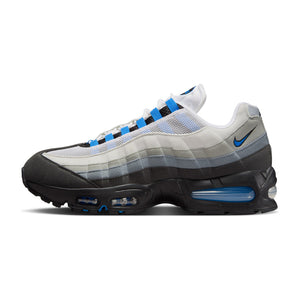
| Air Max 95 | 1995 | first with visible heel and forefoot Air | chunky, loud, a statement | older retros run snug, half size up |
| Air Max 97 | 1997 | first full-length visible unit | slim, futuristic, stiff | very tight at first |
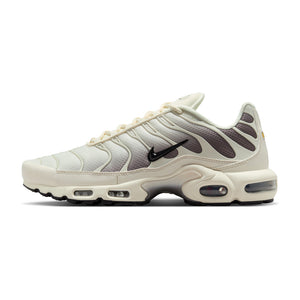
| Air Max Plus (TN) | 1998 | Tuned Air with separate chambers | wavy TPU lines, uncompromising | narrow, hugs the foot |
| Air Max 270 | 2018 | 32 mm heel unit | first pure lifestyle Air Max | reports vary |
| Air Max SC | 2021 | Air element at the heel | entry-level model in a 90s look | true to size |
| Air Max Dn8 | 2025 | 2 units, 8 tubes, full length | close to the ground, bouncy, technical | true to size, slightly snug |
The classics: 1, 90, 95 and 97
Air Max 1 – the slim original
The 1 has the smallest visible Air unit in the family and the flattest sole. That is its selling point: next to modern Air Max models it looks almost restrained, which makes it the easiest of them all to style. The 1987 original had a noticeably larger air chamber but stayed in production for only a few months – it cracked in cold weather. Nike swapped in a smaller unit and only brought the "Big Bubble" back in 2023.
Air Max 90 – the safe bet
It was originally called the Air Max III; only with the reissue in 2000 did it take the name of its launch year. Tinker Hatfield borrowed from the Air Max 1 and the 1989 Air Max Light. The bright red of the first release is known today as "Infrared". Among the classics the 90 is the most comfortable straight out of the box, but it is noticeably broader than the 1. For wide feet that is an advantage; for very narrow feet the hold can feel loose.
Air Max 95 – the statement
The first Air Max not designed by Hatfield: Sergio Lozano took cues from the structure of human ribs and from eroding layers of rock. Technically the 95 was a leap forward – the first model with a visible Air unit in the forefoot as well as the heel. You pay for that in weight and in a break-in period: the layered panels barely give sideways. The 95 is considered the narrowest of the four classics.
Air Max 97 – air from end to end
In 1997 Christian Tresser ran the Air unit across the full length of the sole for the first time. Nike says the lines on the upper were meant to evoke a high-speed train. The 97 rolls through the step softly but feels the stiffest of all the classics, and it wraps the foot strikingly close – its mesh and synthetics hardly stretch.
The modern ones: Plus, 270 and Dn8
The 1998 Air Max Plus sits slightly outside the numbering logic. Sean McDowell drew the wavy TPU stripes from natural motifs and paired them with "Tuned Air": separate air chambers that respond to different load zones. To this day the TN has the most distinctive look in the line – and the tightest fit.
2018 brought the first Air Max designed from the start as an everyday shoe rather than a running shoe: the Air Max 270. Its heel unit is 32 mm tall and the silhouette borrows elements from the Air Max 93 and 180. The result is a very soft heel strike that works well on asphalt and city pavement. If you spend hours standing, test that cushioning first – reviews occasionally call it too soft.
The current line is the Dn. In 2024 the Air Max Dn introduced "Dynamic Air": two pressurised chambers with four tubes in total, the rear pair charged higher at 15 psi than the front pair at 5 psi. Air flows back and forth between the tubes with every step. Its successor, the Air Max Dn8, presented by Nike at the end of January 2025, extends the system across the full length of the sole for the first time: two units, eight tubes, with the pressure arrangement reversed in the forefoot. According to lead designer Jonathan Kosenick the goal was to get closer to the ground and create more flexibility – the chambers touch the surface directly.
If you want an affordable entry point, you often end up with the 2021 Air Max SC – "Sports Classic", a simplified take on the 90.
Size and fit
Nike as a brand tends to run on the snug side, but within the Air Max family the models differ a lot. The common advice looks like this: with the Air Max 1, 90 and SC most people stay true to size. With older retro versions of the Air Max 95 and with the Air Max 97, many go half a size up, because the toe area tapers and the panels don't give. The newer "Big Bubble" versions of the 95 have a rounder toe box and are more often described as true to size.
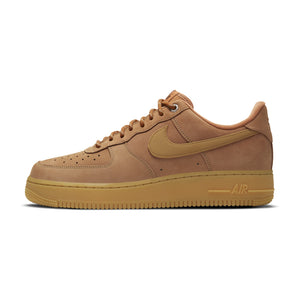
One practical reference point: if you know your size in the Air Force 1, you'll typically sit half a size above it in the Air Max 95 – the AF1 is cut far roomier. For working out your baseline size, see our sneaker size chart; if length isn't your problem but width is, the article on shoe widths D, 2E and 4E helps. Across brands, the size comparison between Nike, adidas, New Balance and Asics is worth a look.
Which one suits you?
You want a sneaker that goes with everything: Air Max 1 or Air Max 90. The 1 is slimmer and more understated, the 90 more comfortable and more robust. With wide feet the 90 is the safer choice, with narrow feet the 1.
You want to stand out: Air Max 95 or Air Max Plus. Both are loud, both are cut narrow, both need breaking in. Plan on half a size up unless your feet are distinctly narrow.
Soft everyday cushioning is what matters: Air Max 270 for the softest heel strike, Air Max Dn8 for a bouncier feel closer to the ground. The 97 sits in between – full-length air, but a stiff build. All three lean heavily on mesh and synthetics, so they pick up dirt faster than leather – the right approach is in our guide to cleaning sneakers.
You want to run regularly: none of these. Air Max are lifestyle shoes; Nike designed the 270 explicitly as one. For training, proper running shoes belong on your feet. You'll find an overview of all the Air Max silhouettes in the Nike Air Max category, and a wider selection in the sneaker overview.
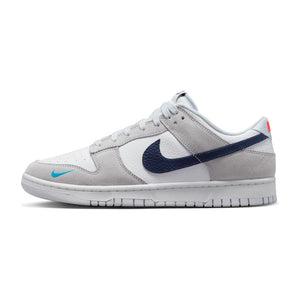
If you're torn between an Air Max and a flat classic, the direct comparison of the Air Force 1 and the Dunk helps – both sit far flatter and firmer than any Air Max.
Frequently asked questions
Do Nike Air Max run small?
Not as a rule, but several models are cut narrow – and that often gets read as "runs small". The Air Max 1, 90 and SC tend to fit true to size. The Air Max 97, Air Max Plus and older Air Max 95 sit tight, and many people go half a size up here, especially with wide feet.
Can you jog in an Air Max?
For catching a train, yes; for running training, no. Even though the early models were developed as running shoes, today's retros and the Air Max 270 are built for everyday wear. They lack the stability, the roll-through geometry and the mileage-tuned durability of a current running shoe.
What is the difference between the Air Max 90 and the Air Max 95?
The 90 has a visible Air unit at the heel only, a broader silhouette and good comfort straight out of the box. The 95 was the first model with visible air in the forefoot too; it is heavier, chunkier and cut considerably narrower. Visually the 90 is the all-rounder, the 95 the statement.
Which Air Max suits wide feet?
The Air Max 90 is the most relaxed – plenty of wearers with wide feet describe it as pleasantly roomy in the forefoot. With the 95, 97 and Plus you should plan on half a size up, because the uppers barely give sideways.
Which Air Max is the most comfortable for long days?
For soft cushioning on hard surfaces, the Air Max 270 and the Dn line come up most often. The 270 relies on its tall heel unit, the Dn8 on a flatter, bouncier system across the full length. If you're mostly standing rather than walking, try the 270's tall heel first – not everyone finds it comfortable.
Why is the Air Max 90 also called the Air Max III?
Because that was its name until 2000 – only with the reissue did it take the name of its launch year. Nike still releases the silhouette under the old label from time to time.